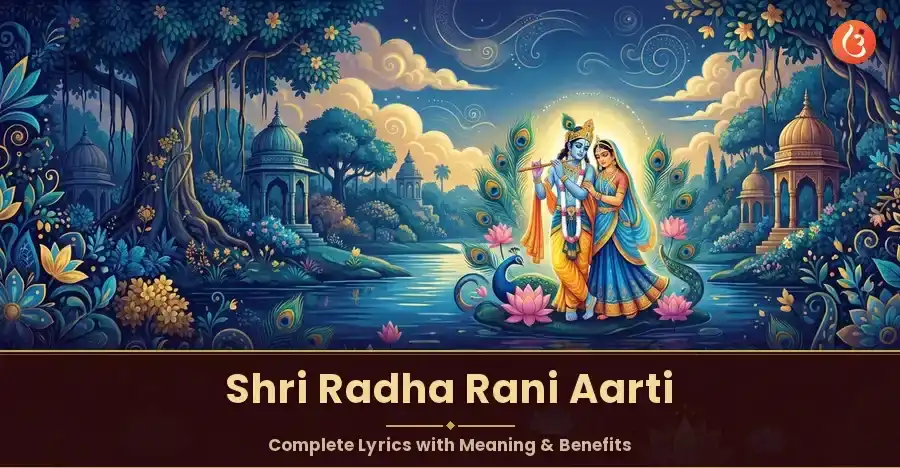
Radha Rani Aarti: Lyrics, Meaning & Benefits (2026 Guide)
By Pandit Madhav S., Braj Devotional Tradition Scholar | Reviewed by Utsav editorial team
The Radha Rani Aarti (आरती श्री राधा रानी की) is a devotional hymn expressing the purest form of divine love for Shri Radha, Lord Krishna's eternal consort. According to the Brahma Vaivarta Purana, she is the Hladini Shakti—Krishna's own bliss-giving energy. Chanting this aarti is considered the most direct way to feel the grace of both Radha and Krishna, bringing deep spiritual peace and joy to the devotee.
Quick Answer: Radha Rani Aarti
- What: A traditional devotional hymn (Aarti) dedicated to Radha Rani, the embodiment of divine love in the Vaishnava tradition.
- When to Chant: Daily during morning or evening puja, and especially on Fridays, Ashtami tithis, and the festival of Radhashtami (19th September 2026).
- Why: To honor Radha's selfless devotion, seek her blessings for spiritual growth, and feel closer to both Radha and Krishna.
- How to Participate: You can participate in special pujas for Lord Krishna at verified temples through Utsav, with Dakshina starting from ₹251.
Table of Contents
- What Are the Complete Lyrics of Radha Rani Aarti?
- What is the Verse-by-Verse Meaning of the Aarti?
- What is the Story & Origin of the Radha Rani Aarti?
- What Are the Benefits of Reciting Radha Rani Aarti?
- How Do You Recite Radha Rani Aarti Correctly (The Complete Vidhi)?
- When Are the Best Days to Chant Radha Rani Aarti in 2026?
- Who Is Radha Rani, the Supreme Goddess of Love?
- Participate in Krishna Pujas on Utsav
- Sources & References
What Are the Complete Lyrics of Radha Rani Aarti?
This beloved aarti is sung in the temples of Vrindavan and Barsana daily. The lyrics, traditionally composed in Braj Bhasha, celebrate Radha as the daughter of Vrishbhanu and the beloved of Mohan (Krishna). Here is the full text for you to recite.
आरती श्री वृषभानुसुता की, मंजुल मूर्ति मोहन ममता की।
त्रिविध तापयुत संसृति नासिनी, विमल विवेकविराग विकासिनी॥
Radha Rani Aarti (English Transliteration)
Aarti shri vrishbhanusuta ki, manjul murti mohan mamta ki.
Trividh tapyut sansriti nasini, vimal vivekvirag vikasini.
Paalan poshan dash digpaalan, tum vin naath karen ur daaran.
Chatur-mukha Shiv-narad-muni-dhyavat, nar-nar-naari-nikat nahi aavat.
Charan-pranaali ati adbhut gati, jaake prabhu pag-padma-paraagat.
Kunj-keli-ras-raas-vilasini, shyama-shyam-rasik-anuraagini.
Shri vrindavan-lata-pata-vaasini, braj-jan-rakshak-vighna-vinashini.
Pankaj-naini, vimal-vishaal-naini, rasik-rasayan-sukh-sarvasv-deni.
Mridu-manda-muskaan-manohari, mohan-man-mohat-vrishbhanu-dulari.
Laadli shri radhe-radhe gaavat, hari-sang-saath sakal jag paavat.
Keerati-kumari, vraj-jan-dulaari, ati adbhut shobha ati nyaari.
Yah aarti jo gaave shravan kare, so radha-pad-kamal-raj paave.
What is the Verse-by-Verse Meaning of the Aarti?
Understanding the meaning behind the words transforms the aarti from a simple recitation into a heartfelt prayer. The verses, according to the Braj tradition, are not just praise; they're a meditation on Radha's divine nature. Here's what each line truly means.
Verse 1: Aarti shri vrishbhanusuta ki, manjul murti mohan mamta ki.
This is the aarti of Vrishbhanu's daughter (Radha), whose beautiful form is the very embodiment of love for Mohan (Krishna).
Verse 2: Trividh tapyut sansriti nasini, vimal vivekvirag vikasini.
She destroys the three-fold miseries of worldly existence and awakens pure wisdom and detachment in the hearts of devotees.
Verse 3: Paalan poshan dash digpaalan, tum vin naath karen ur daaran.
Even the ten divine guardians of the directions look to you for sustenance. Without you, even the Lord feels a void in His heart. (This is a powerful statement on her importance).
Verse 4: Chatur-mukha Shiv-narad-muni-dhyavat, nar-nar-naari-nikat nahi aavat.
The four-headed Brahma, Lord Shiva, and sages like Narad meditate on you, yet ordinary mortals cannot easily approach your divine mystery.
Verse 5: Charan-pranaali ati adbhut gati, jaake prabhu pag-padma-paraagat.
The path of your lotus feet is wondrous; even the Lord Himself follows in their footsteps.
Verse 6: Kunj-keli-ras-raas-vilasini, shyama-shyam-rasik-anuraagini.
You are the one who enjoys the divine plays (leelas) and the Raas dance in the groves of Vrindavan, the eternal lover of Shyam (Krishna).
Verse 7: Shri vrindavan-lata-pata-vaasini, braj-jan-rakshak-vighna-vinashini.
You reside in every leaf and vine of Vrindavan. You are the protector of the people of Braj and the destroyer of all obstacles. This is why she's worshipped so intensely there.
Verse 8: Pankaj-naini, vimal-vishaal-naini, rasik-rasayan-sukh-sarvasv-deni.
With eyes as beautiful and pure as a lotus, you bestow the ultimate happiness and the essence of all divine mellows upon your devotees.
Verse 9: Mridu-manda-muskaan-manohari, mohan-man-mohat-vrishbhanu-dulari.
Your gentle, captivating smile enchants the mind of Mohan Himself, O beloved daughter of Vrishbhanu.
Verse 10: Laadli shri radhe-radhe gaavat, hari-sang-saath sakal jag paavat.
By chanting "Radhe Radhe," one attains the company of Hari (Krishna) and finds fulfillment in the entire world. It's that simple.
Verse 11: Keerati-kumari, vraj-jan-dulaari, ati adbhut shobha ati nyaari.
O daughter of Keerti, beloved of the people of Braj, your splendor is magnificent and absolutely unique.
Verse 12: Yah aarti jo gaave shravan kare, so radha-pad-kamal-raj paave.
Whoever sings or listens to this aarti will receive the dust of Radha's lotus feet, the ultimate spiritual attainment.
What is the Story & Origin of the Radha Rani Aarti?
The Radha Rani Aarti isn't attributed to a single author but is a product of the rich oral tradition of the Braj region, passed down through generations of devotees. Its language and sentiment are deeply rooted in the teachings of the Gaudiya Vaishnava saints who saw Radha as the supreme object of devotion. The Brahma Vaivarta Purana (ब्रह्म वैवर्त पुराण) is one of the key scriptures that elaborates on Radha's divine status as the original feminine energy.
The aarti captures the essence of this philosophy. It's not just a song; it's a theological statement. It places Radha at the center of the spiritual universe, so powerful that even Krishna is enchanted by her. This is why in the temples of Barsana and Vrindavan, devotees often chant "Radhe Radhe" before "Hare Krishna." They believe that approaching Krishna through Radha is the most effective path.
What Are the Benefits of Reciting Radha Rani Aarti?
Devotees and saints of the Vaishnava tradition believe that chanting Radha Rani's aarti with a pure heart brings immense spiritual rewards. It’s more than just a ritual; it’s a direct line to divine grace.
- Spiritual Proximity: The Phala Shruti (the final verse stating the benefits) explicitly says that the chanter receives the "dust of Radha's lotus feet," which is symbolic of attaining the highest state of devotion.
- Grace of Krishna: It's a core belief in Vaishnavism that pleasing Radha is the surest way to please Krishna. Chanting her aarti is believed to attract the grace of both divine personalities.
- Inner Peace and Joy: The aarti describes Radha as the "nasini" (destroyer) of worldly miseries. Its recitation is said to calm the mind, remove anxieties, and fill the heart with ananda (bliss).
- Removal of Obstacles: As the "vighna-vinashini" (destroyer of obstacles), she is prayed to for removing hurdles in one's spiritual and material life.
- Deepens Devotion (Bhakti): Regular chanting helps cultivate a deep, personal connection with the divine, fostering selfless love and surrender, which is the essence of Bhakti Yoga.
How Do You Recite Radha Rani Aarti Correctly (The Complete Vidhi)?
To get the full spiritual benefit, performing the aarti with the proper vidhi (method) is essential. It's a simple but powerful practice you can incorporate into your daily routine. Here’s how verified pandits recommend performing it.
- Preparation (Shuddhi): Begin by taking a bath and wearing clean clothes. The space where you perform the aarti should be clean and serene.
- Setup: Place an image or idol of Radha Krishna on a clean altar. Light a ghee or camphor lamp. You can also offer flowers (especially lotus or jasmine) and a simple prasad like fruits or mishri.
- Invocation: Before starting, close your eyes and meditate on Radha Rani for a moment. You can chant a simple mantra like "Om Hreem Radhikaye Namah" to invoke her presence.
- The Aarti: Stand and perform the aarti by waving the lamp in a clockwise circular motion in front of the deity while singing the lyrics with devotion. Ring a small bell with your left hand if you have one.
- Conclusion: After the aarti, cup your hands over the flame and bring them to your eyes and the top of your head to receive the blessings. Distribute the prasad among family members.
For best results, perform the aarti during your morning or evening puja, especially on Fridays.
When Are the Best Days to Chant Radha Rani Aarti in 2026?
While chanting the Radha Rani Aarti is beneficial every day, certain days are considered especially auspicious and are believed to amplify its spiritual impact. According to Panchang, these are the key dates to mark in your calendar for 2026.
Date | Event | Significance for Devotees |
|---|---|---|
Every Friday | Shukravar | Friday is dedicated to the divine feminine and is an excellent day for honoring Radha. |
Ashtami Tithi | Eighth Lunar Day | The eighth day of any lunar fortnight is sacred to Radha, as she was born on this tithi. |
Krishna's Birthday | Chanting Radha's aarti on this day is considered essential to complete Janmashtami celebrations. | |
Radha's Birthday | This is the most important day. Chanting the aarti on Radhashtami is believed to yield immense blessings. |
Who Is Radha Rani, the Supreme Goddess of Love?
In many Hindu traditions, Radha is not just a consort; she is the origin of all Shaktis and the supreme goddess herself. The Brahma Vaivarta Purana describes her as the mula prakriti (root nature) from whom everything manifests. She is the internal pleasure potency of Krishna, and the two are eternally inseparable.
Think of it this way: Krishna is the sun, and Radha is the sunshine. One cannot exist without the other. She represents the ultimate devotee, and her love is the benchmark for all forms of bhakti. Her story teaches that the highest spiritual attainment is not liberation (moksha) but selfless, unconditional love (prema). You can learn more about the divine love story in texts like the Gita Govinda.
Participate in Krishna Pujas on Utsav
While you can chant the Radha Rani Aarti at home, participating in temple rituals performed by verified pandits can deepen your connection. Utsav brings these authentic experiences directly to you.
Recommended Pujas:
- Kamika Ekadashi Vishesh Shri Banke Bihari Bhog: Participate in a special offering at the famed Banke Bihari temple, a place steeped in Radha-Krishna leela. Dakshina starts from ₹251.
- Janmashtami Vishesh Makhan Bhog & Bansuri Daan: Celebrate Krishna's birth by offering his favorite items at this sacred temple.
How to Participate:
1. Choose the puja you wish to perform.
2. Fill out the Sankalp Form with your name and gotra.
3. Devotees receive a puja video and authentic temple prasad delivered to their homes.
Scripture Composer/History
The Radha Rani Aarti, Aarti Shri Vrishbhanusuta Ki, is a traditional hymn whose authorship is not attributed to a single composer but is considered a devotional treasure from the Braj tradition. Composed in Braj Bhasha, the literary language of Krishna bhakti, its form likely crystallized during the 18th-19th centuries. The aarti's theological foundations are rooted in Puranic scriptures like the Brahma Vaivarta Purana and the Garga Samhita, which elevate Radha as Krishna's supreme Shakti. It has been transmitted orally through the parampara (lineage) of temple priests and devotees, especially in the holy towns of Barsana and Vrindavan, making it a living, breathing part of daily worship rather than a text with a single canonical author.
Sources & References
Scriptural Authority:
- Brahma Vaivarta Purana: This text is a primary source establishing Radha's supreme theological position as the Hladini Shakti.
- Oral Tradition of Braj: The Aarti's composition and vidhi are preserved and passed down by the saints and devotees of Vrindavan and Barsana.
Panchang & Dates:
- Festival dates for 2026 are sourced from verified Panchang calculations.
Related Pujas on Utsav:
- Shri Banke Bihari Temple, Vrindavan.