Ganesh Aarti: Full Lyrics, Meaning & The Daily Vidhi to Remove Obstacles
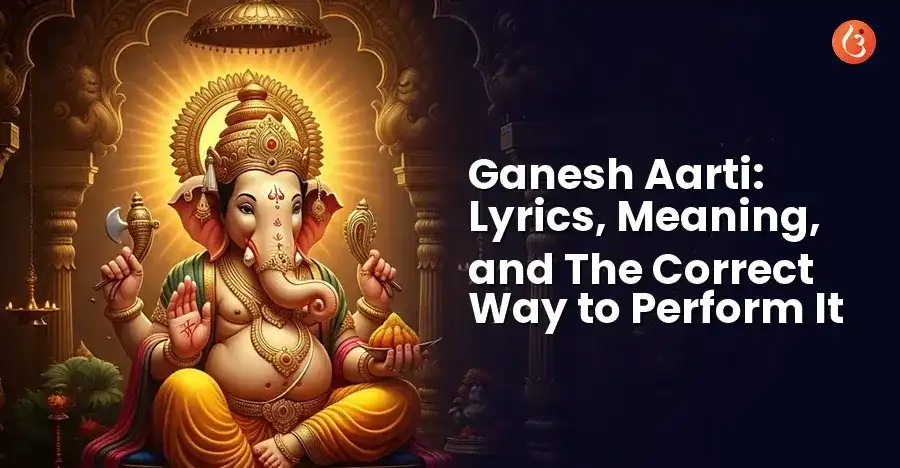
Performing Ganesh Aarti is the essential Hindu ritual to invoke Lord Ganesha, the remover of obstacles, using lyrics, light, and pure devotion. According to the Ganesha Purana (Upasanā Khaṇḍa), offering this prayer with a sincere heart clears a devotee's path of all difficulties. It's not just a tradition; it's the spiritual key to ensuring your ventures are blessed with success.
Quick Summary
- What: Ganesh Aarti (गणेश आरती) is a devotional hymn and light-offering ritual for Lord Ganesha, the Prathama Pūjya (first to be worshipped).
- Why: To remove obstacles (Vighna), seek blessings for new beginnings, and express heartfelt devotion to the son of Śiva and Pārvatī.
- Key Aarti: "Jai Ganesh, Jai Ganesh, Jai Ganesh Deva," composed by Pandit Shivanand, is the most universally chanted version.
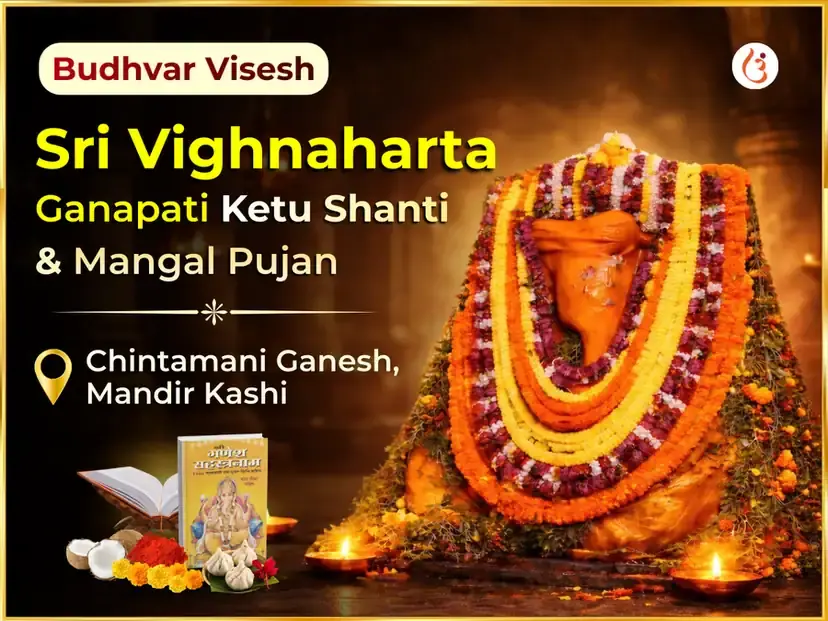
- How to Participate: For deep-seated obstacles, you can Participate in the Chintamani Ganesh Ketu Shanti Puja — Dakshina from ₹1001.
Table of Contents
- What Do Scriptures Say About Aarti's Power?
- Jai Ganesh Deva: Full Lyrics & Meaning (Line-by-Line)
- What is the Correct Daily Vidhi to Perform Ganesh Aarti?
- Why Is Aarti Always Performed Clockwise?
- What are the Key Items for a Ganesh Aarti Thali?
- When is the Best Time to Perform Ganesh Aarti?
- How to Participate in Ganesha Pujas on Utsav
What Do Scriptures Say About Aarti's Power?
So, what’s really happening when you perform an aarti? It's so much more than just singing. The Skanda Purana explains that the flame itself isn't just light; it's a potent spiritual force that actively dispels ignorance and negative energies from your home. You're not just waving a lamp; you're wielding the fire of knowledge against the darkness of doubt. This changes everything.
That circular motion isn't random, either. It symbolizes the entire cosmic cycle of creation, preservation, and dissolution, with the divine right at its center. When you perform aarti, you aren't just praying to be part of the universe; you're acknowledging that the universe revolves around the divine presence in your life. It's a deeply powerful realization.
Jai Ganesh Deva: Full Lyrics & Meaning (Line-by-Line)
Composed by the great devotee Pandit Shivanand, this aarti has become the universal prayer for Lord Ganesha. It’s simple, beautiful, and captures the essence of his divine attributes. You don't need to be a scholar to feel its power.
Here’s the full text with accurate transliteration and meaning, so you can connect with every single word.
| Devanagari | IAST Transliteration | English Translation |
|---|---|---|
| जय गणेश जय गणेश, जय गणेश देवा । | Jaya Ganeśa, Jaya Ganeśa, Jaya Ganeśa Devā | Victory to you, Lord Ganesha, God of all gods. |
| माता जाकी पार्वती, पिता महादेवा ॥ | Mātā Jākī Pārvatī, Pitā Mahādevā | |
| एक दंत दयावंत, चार भुजा धारी । | Eka Danta Dayāvanta, Cāra Bhujā Dhārī | You have one tusk, are full of compassion, and have four arms. |
| माथे पर तिलक सोहे, मूषे की सवारी ॥ | Māthe Para Tilaka Sohe, Mūṣe Kī Savārī | |
| पान चढ़े फूल चढ़े, और चढ़े मेवा । | Pāna Caḍhe Phūla Caḍhe, Aura Caḍhe Mevā | You are offered betel leaves, flowers, and dry fruits. |
| लड्डुअन का भोग लगे, संत करें सेवा ॥ | Laḍḍuana Kā Bhoga Lage, Santa Kareṁ Sevā | |
| अंधन को आंख देत, कोढ़िन को काया । | Andhana Ko Ān̐kha Deta, Koṛhina Ko Kāyā | You give sight to the blind and a healthy body to the leper. |
| बांझन को पुत्र देत, निर्धन को माया ॥ | Bānjhana Ko Putra Deta, Nirdhana Ko Māyā | |
| 'सूर' श्याम शरण आए, सफल कीजे सेवा । | 'Sūra' Śyāma Śaraṇa Āe, Saphala Kīje Sevā | "Surdas" says, we have come to your refuge, make our service fruitful. |
| माता जाकी पार्वती, पिता महादेवा ॥ | Mātā Jākī Pārvatī, Pitā Mahādevā | |
| दीनन की लाज रखो, शंभु सुतवारी । | Dīnana Kī Lāja Rakho, Śambhu Sutavārī | Protect the honor of the humble, O son of Shambhu (Shiva). |
| कामना को पूर्ण करो, जाऊं बलिहारी ॥ | Kāmanā Ko Pūrṇa Karo, Jāūṁ Balihārī |
What is the Correct Daily Vidhi to Perform Ganesh Aarti?
You don't need a grand setup for your daily aarti. What truly matters is your devotion (bhakti). Here's a simple, correct vidhi (procedure) you can follow every day at home. It’s easy.
- Purify Yourself: Before you begin, take a bath and wear clean clothes. This isn't just about physical cleanliness; it's about preparing your mind for worship.
- Prepare the Thali: Arrange your aarti thali with a ghee or camphor lamp, incense, flowers, and prasad. You can learn more about Things To Offer Lord Ganesha At Home in our guide.
- Light the Lamp: Light the lamp and incense sticks. The light symbolizes the removal of darkness and ignorance. It’s a beautiful moment.
- Chant the Aarti: Begin chanting "Jai Ganesh Deva" with full devotion. Ring a small bell with your left hand while waving the thali with your right.
- Perform Clockwise: Wave the aarti thali in a clockwise circular motion in front of the deity's idol or picture.
- Offer Blessings: After the aarti, cup your hands over the flame and gently touch your eyes and the top of your head. This is how you receive the blessings from the divine light.
- Distribute Prasad: Finally, distribute the prasad among your family members. It's now blessed.
Why Is Aarti Always Performed Clockwise?
Have you ever wondered why the aarti lamp is always moved in a clockwise direction? It’s not just a random tradition. This movement, known as pradakshina, is deeply symbolic and mirrors the very laws of the cosmos.
Think about it. The planets revolve around the sun, keeping it as their center. In the same way, when you perform aarti, you're placing God at the center of your life and acknowledging that your entire existence revolves around that divine principle. It’s a humble and powerful act of surrender, reminding you of your place in the grand cosmic order. You aren't just a person in a room; you're part of a divine dance.
What are the Key Items for a Ganesh Aarti Thali?
Your aarti thali doesn't need to be elaborate, but each item on it has a specific spiritual meaning. Getting these basics right can make your daily ritual feel so much more complete. You'll want to include these five essential elements.
- A Ghee Lamp (Diya): Represents light, purity, and the element of fire (Agni). It’s the central element, dispelling darkness.
- Incense (Agarbatti): Symbolizes the element of air (Vayu) and purifies the atmosphere with its fragrance, representing the devotee's wish reaching the divine.
- Flowers: Represents the element of ether/space (Akasha). Red hibiscus is Lord Ganesha's favorite, but any fresh flower offered with love works.
- Akshat (Uncooked Rice): Symbolizes prosperity and the element of earth (Prithvi). It’s an offering for abundance and well-being.
- Prasad (Offering): Represents the element of water (Jal), symbolizing the sweetness of devotion. Modaks or laddoos are traditional favorites for Ganesha.
When is the Best Time to Perform Ganesh Aarti?
While you can connect with Ganesha anytime, certain times of the day are considered more spiritually potent for performing aarti. Sticking to a schedule can build powerful discipline and focus in your spiritual life. It’s a game-changer.
The most auspicious times are during Sandhya, the transitional hours of the day. This means:
1. Morning: Just after sunrise, after your morning bath. It sets a positive and obstacle-free tone for your entire day.
2. Evening: Just after sunset. This helps you express gratitude for the day and cleanse any negativity before you rest.
For specific auspicious timings, you can always check the daily Panchang. Performing aarti during festivals like Ganesh Chaturthi or on Sankashti Chaturthi every month is also incredibly beneficial.
How to Participate in Ganesha Pujas on Utsav
Sometimes, the obstacles in your path feel too big to tackle alone. That's when having a puja performed on your behalf by a verified pandit can make all the difference. You don't have to manage it all yourself.
When you Participate in a puja through Utsav, the pandit performs the ritual at a verified temple, chanting your Name and Gotra in the Sankalp. It’s a powerful way to send your prayer directly to the divine.
- For Wednesday Blessings: Participate in the Budhvar Visesh Ucchista Ganesh Maha Abhishek. Wednesday is Ganesha's special day, making this puja deeply effective. Dakshina starts from ₹851.
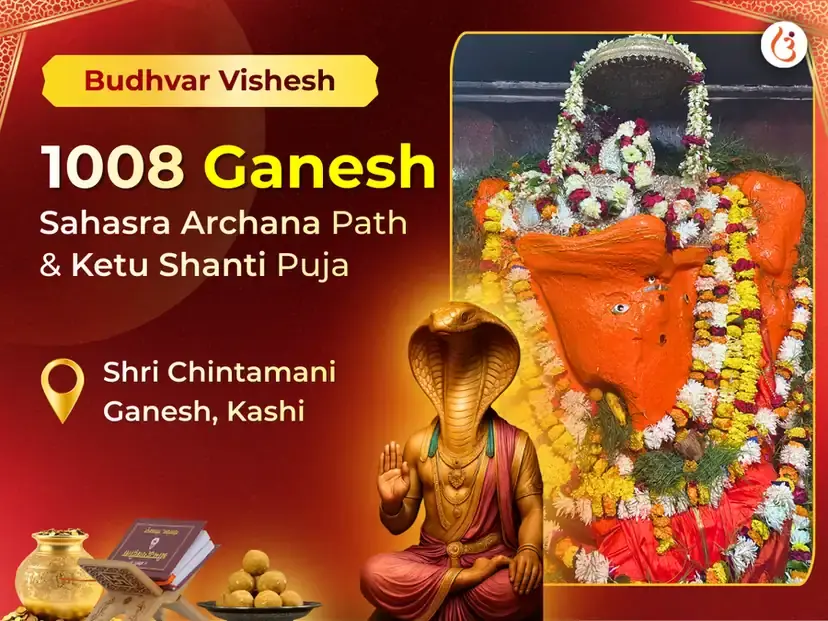
- For Removing Deep Obstacles: If you're facing persistent challenges, especially related to Ketu, Participate in the Chintamani Ganesh 1008 Sahasra Archana Path. Dakshina starts from ₹1001.
Within 3-5 days, you'll receive a video of the puja and authentic Prasad delivered right to your home.
Sources & References
Scriptural Authority:
- Ganesha Purana, Upasanā Khaṇḍa (On the power of Ganesha worship)
- Skanda Purana (On the spiritual significance of the aarti flame)
- Mudgala Purana (Primary text on the forms and legends of Lord Ganesha)
Compositional Authority:
- Pandit Shivanand (Attributed composer of the "Jai Ganesh Deva" aarti)
Related Pujas on Utsav:
- Chintamani Ganesh Visesh 1008 Ganesh Sahasra Archana Path Ketu Shanti Puja
- Budhvar Visesh Ucchista Ganesh Ghritsneham Madhuras Maha Abhishek