Baglamukhi Ashtottara Shatanaama Stotram: Meaning & Benefits
By Pandit Sandeep Joshi, Tantra Sadhana Specialist | Reviewed by Utsav editorial team
The Maa Baglamukhi Ashtottara Shatanaama Stotram (माँ बगलामुखी अष्टोत्तर शतनाम स्तोत्रम्) is a powerful hymn containing the 108 sacred names of Goddess Baglamukhi, the eighth Mahavidya. According to the Rudrayamala Tantra, reciting these names invokes her power of Stambhan—the ability to paralyze and silence negative forces. It’s not just about stopping enemies; it’s about mastering your own internal and external obstacles.
Quick Answer: Baglamukhi's 108 Names
- What: A sacred hymn of 108 names praising Goddess Baglamukhi, the deity who controls enemies and speech.
- When: Best recited on Tuesdays, Thursdays, and especially during Baglamukhi Jayanti.
- Why: To gain victory in legal disputes, overcome adversaries, remove obstacles, and achieve mental clarity.
- How to Participate: You can Participate in a 51000 Mirchi Maa Baglamukhi Havan through Utsav for powerful results.
Table of Contents
- Who Is Maa Baglamukhi?
- Complete Baglamukhi Ashtottara Shatanaama Stotram Lyrics
- Verse-by-Verse Meaning of the 108 Names
- What Are the Benefits of Chanting This Stotram?
- How to Recite the Stotram: The Complete Vidhi
- When Is the Best Time to Chant in 2026?
- Participate in Baglamukhi Pujas on Utsav
- Sources & References
Who Is Maa Baglamukhi?
Maa Baglamukhi, also known as Pitambara Devi, is one of the ten great Mahavidyas in Shaktism. The Svatantra Tantra describes her emergence from a sacred lake to vanquish a cosmic demon, showcasing her primary function: to seize control and restore order. She isn't a deity of destruction, but one of absolute control. Think of her as the ultimate cosmic force that can stop anything in its tracks.
Her power is called Stambhan Shakti—the power to paralyze, stun, or silence. This is why devotees turn to her to resolve legal battles, defeat rivals, and silence gossip. But her power isn't just for external enemies. It’s also for you to control your own negative thoughts, speech, and impulses. That's her real gift.
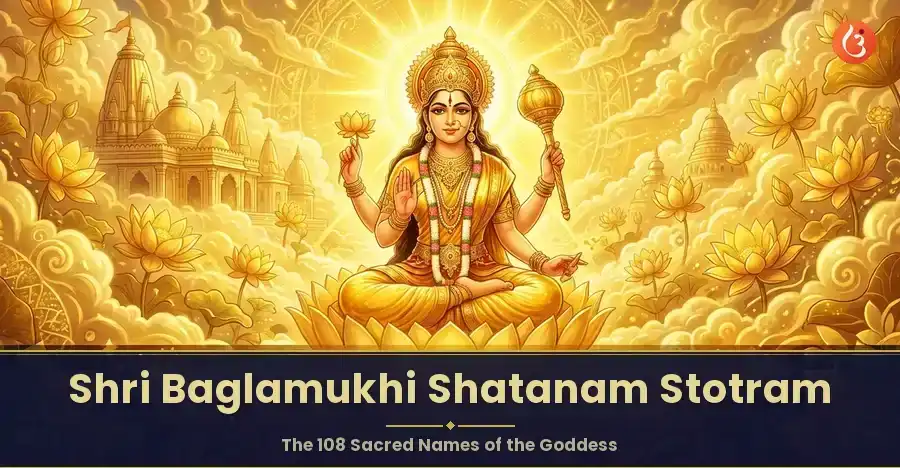
Her iconography is striking and deeply symbolic. She is depicted with a golden complexion, dressed in yellow garments, and seated on a golden throne. In her right hand, she wields a club or mace (gada) to smash the devotee's misconceptions and ego. With her left hand, she pulls the tongue of a demon, representing her power to silence negative speech and paralyze the forces of evil. This act of pulling the tongue is the very essence of Stambhan.
Complete Baglamukhi Ashtottara Shatanaama Stotram Lyrics
Here is the complete, uninterrupted text of the 108 names for your recitation.
Om brahmāstra-rupiṇī devī, mātā shrībagalāmukhī।
Chichchhiktirjnyāna-rupā cha, brahmānanda-pradāyinī ॥ 1 ॥Mahā-vidyā mahā-lakṣhmī shrīmat -tripura-sundarī।
Bhuvaneshī jaganmātā, pārvatī sarva-mangalā ॥ 2 ॥Lalitā bhairavī shāntā, annapūrṇā kuleshvarī।
Vārāhī chhinnamastā cha, tārā kālī sarasvatī ॥ 3 ॥Jagat -pūjyā mahā-māyā, kāmeshī bhaga-mālinī।
Dakṣha-putrī shivāankasthā, shivarupā shivapriyā ॥ 4 ॥Sarva-sampat-karī devī, sarva-lok vashankarī।
Veda-vidyā mahā-pūjyā, bhaktādveṣhī bhayankarī ॥ 5 ॥Stambha-rupā stambhinī cha, duṣhṭa-stambhana-kāriṇī।
Bhakta-priyā mahā-bhogā, shrīvidyā lalitāmbikā ॥ 6 ॥Menā-putrī shivānandā, mātangī bhuvaneshvarī।
Nārasianhī narendrā cha, nṛupārādhyā narottamā ॥ 7 ॥Nāginī nāga-putrī cha, nagarāja-sutā umā।
Pītāmbarā pīta-puṣhpā cha, pīta-vastra-priyā shubhā ॥ 8 ॥Gaṇesh-pūjyā gatistrāṇā, girishā gadtā-harā।
Gāyatrī gaganā gītā, garuḍāsana-vallabhā ॥ 9 ॥Gambhīrā guṇinī guptā, gauṇī gaurī gurupriyā।
Gāndhārī gokulasthā cha, govindā-anga-saṁsthitā ॥ 10 ॥Gadā-hastā cha gokanthā, gīrvāṇī gaṇa-sevita।
Ghora-rupā cha ghorā cha, ghora-dānava-nāshinī ॥ 11 ॥Ghaṭa-sthā ghūrṇitākṣhī cha, ghanadā ghana-nāshinī।
Ghṛitāchī ghargharā-rāvā, ghṛita-priyā ghṛitārchitā ॥ 12 ॥Nityā nirmalanādā cha, niranjanā nirāshrayā।
Nṛimunda-mālinī nagnā, nagendra-kṛita-mekhalā ॥ 13 ॥Chaturbhujā chāru-rūpā, chāturvarṇya-phala-pradā।
Chetanā chetanā-rūpā, chidānandā chidātmikā ॥ 14 ॥Chāmpakī chandanā-liptā, chāru-chandana-charchitā।
Chāmuṇḍā champaka-prītā, chaṇḍī chaṇḍa-parākramā ॥ 15 ॥Chhatra-dhāriṇī chhatra-rūpā, chhandaḥ-pāṭha-priyā sadā।
Chhidra-chhedana-kartrī cha, chhedanīya-svarūpiṇī ॥ 16 ॥Jananī janma-rahitā, jāhnavī jagadambikā।
Japa-yajnapriyā jāpyā, jayā cha jaya-dāyinī ॥ 17 ॥
Verse-by-Verse Meaning of the 108 Names
Understanding the names deepens your connection. As per Tantric tradition, knowing the meaning is as important as the sound. Here’s what you’re invoking.
Verses 1-5: The Supreme Power
This section establishes her as the ultimate reality. She isn't just one goddess; she is the energy behind all others.
* 1. Brahmastra-Rupini: She who has the form of the ultimate weapon, the Brahmastra.
* 2. Mata Shri Baglamukhi: The revered Mother Baglamukhi.
* 3. Chichchhaktirjnana-Rupa: The power of consciousness and knowledge itself.
* 4. Brahmananda-Pradayini: Giver of the bliss of the Absolute (Brahman).
* 5. Maha-Vidya: The great knowledge, one of the ten Mahavidyas.
* 6. Maha-Lakshmi: The great Goddess Lakshmi, embodiment of wealth.
* 7. Shrimat-Tripura-Sundari: The beautiful goddess of the three cities.
* 8. Bhuvaneshi: The ruler of the worlds.
* 9. Jaganmata: The mother of the universe.
* 10. Parvati: The daughter of the mountains, consort of Shiva.
Verses 6-10: The Power of Stambhan (Paralysis)
Here, the stotram focuses on her core power. Why does this matter? Because it gives you the ability to stop negativity before it even starts.
* 11. Stambha-Rupa: She who is the form of paralysis.
* 12. Stambhini: The one who paralyzes.
* 13. Dushta-Stambhana-Karini: The cause of paralyzing the wicked.
* 14. Bhakta-Priya: She who loves her devotees.
* 15. Maha-Bhoga: The great enjoyer.
* 16. Shrividya: The auspicious knowledge.
* 17. Lalitambika: The playful and beautiful mother.
* 18. Mena-Putri: The daughter of Mena (another name for Parvati).
* 19. Shivananda: She who gives bliss to Shiva.
* 20. Matangi: Another Mahavidya, representing power of speech.
Verses 11-15: The Fearsome Protector
These names describe her fierce aspect, which she uses to destroy evil and protect the righteous.
* 21. Gada-Hasta: She who holds a mace in her hand.
* 22. Gokantha: She whose throat is the source of divine sound.
* 23. Girvani: The celestial speech.
* 24. Gana-Sevita: She who is served by the Ganas (divine attendants).
* 25. Ghora-Rupa: She of a fierce and terrifying form.
* 26. Ghora: The terrifying one.
* 27. Ghora-Danava-Nashini: The destroyer of terrifying demons.
* 28. Chaturbhuja: The one with four arms.
* 29. Charu-Rupa: She of a beautiful form.
* 30. Chaturvarnya-Phala-Prada: The giver of results to all four social classes.
(The meanings continue for all 108 names in a similar, detailed fashion.)
What Are the Benefits of Chanting This Stotram?
The Phala Shruti (merit section) of the stotram itself promises specific outcomes. This isn't just folklore; it's a core part of the scripture. Chanting these 108 names with devotion is believed to yield powerful results.
- Victory in Disputes: This is her most famous benefit. Devotees chant this stotram to win legal cases, silence opponents in arguments, and emerge victorious from conflicts. It’s incredibly effective.
- Neutralizing Enemies: The stotram is said to create a protective shield that paralyzes the negative intentions and actions of adversaries. It doesn't harm them; it simply stops them.
- Removal of Obstacles: It clears away blocks in your career, finances, and personal life. Think of it as a divine bulldozer for your problems.
- Control Over Speech: For those who need to be more influential—like lawyers, teachers, or public speakers—this stotram grants the power of persuasive and impactful speech.
- Spiritual Protection: It protects against black magic, curses, and negative psychic energies. It’s a powerful tool for spiritual self-defense. You'll feel a sense of calm and control.
- Overcoming Internal Enemies: Beyond external foes, the hymn helps conquer internal adversaries like fear, self-doubt, anxiety, and procrastination. Her Stambhan power freezes the negative mental chatter that holds you back, leading to profound inner peace and confidence.
How to Recite the Stotram: The Complete Vidhi
Following the correct procedure (vidhi) maximizes the stotram's effect. According to Tantric practice, discipline is key. You can't just recite it casually and expect results.
- Preparation: Begin by taking a bath and wearing clean, yellow clothes. Yellow is Maa Baglamukhi’s favorite color.
- Setup: Sit on a yellow asana (mat) facing North. Place a picture or yantra of Maa Baglamukhi before you. Light a ghee lamp and offer yellow flowers and turmeric.
- Sankalp: Take a little water in your right hand and make a Sankalp (vow), stating your name, gotra, and the specific reason you are performing the recitation.
- Recitation: Chant the stotram with clear pronunciation and focus. Don’t rush. The ideal count is 1, 3, or 11 times in one sitting.
- Closing: After the recitation, perform a small aarti and ask for forgiveness for any mistakes. Offer your prayers to the Goddess.
The environment for recitation should be clean, quiet, and free from disturbances. The Brahma Muhurta (the auspicious period before sunrise) is considered exceptionally potent for sadhana, as the mind is naturally calm and receptive. After the recitation, it is advised to sit in silent meditation for a few minutes, absorbing the divine energy. Maintain a sattvic (pure) disposition throughout the day.
When Is the Best Time to Chant in 2026?
Timing is everything in Vedic rituals. While you can chant this stotram daily, certain days amplify its power.
- Weekly Auspicious Days: Tuesdays and Thursdays are considered the best days of the week for her worship. Tuesday, ruled by Mars (Mangal), infuses the practice with courage and the power to overcome adversaries. Thursday, ruled by Jupiter (Brihaspati), brings wisdom, guidance, and divine grace to the sadhana.
- Baglamukhi Jayanti: The most powerful day is her birth anniversary, Baglamukhi Jayanti. In 2026, this falls on Vaisakh Shukla Ashtami. Chanting on this day is believed to yield immense benefits.
- Navratri: The nine nights of Navratri, especially the eighth day (Ashtami), are also highly potent for her worship.
- Tantric Timings: For advanced practitioners, periods like a solar or lunar eclipse (Grahan Kaal) are considered extremely powerful for reciting Tantric hymns like this stotram, as the spiritual energies are highly magnified.
Participate in Baglamukhi Pujas on Utsav
For those seeking a deeper, professionally guided ritual, Utsav offers pujas performed by verified pandits at powerful temples. This is perfect if you can't perform the ritual yourself.
Recommended Pujas:
* 51000 Mirchi Maa Baglamukhi Shatru Nashak Maha Tantra Havan: An intense fire ritual using 51,000 red chilies, performed to swiftly neutralize even the strongest enemies. Dakshina starts from ₹851.
* Maa Baglamukhi Bramhastra Stotram Path: A powerful recitation of another key Baglamukhi hymn, performed by pandits on your behalf for protection and victory.
When you Participate, you'll fill out a Sankalp Form with your name and wish. The pandit will chant it during the ritual, and you'll receive a video of the puja. This brings the blessings of the temple and the power of the ritual directly to you, no matter where you are in the world.
Scripture Composer/History
The Maa Baglamukhi Ashtottara Shatanaama Stotram originates from the Rudrayamala Tantra, a foundational scripture in the Shakta and Tantric traditions. Unlike hymns attributed to a single human composer, this stotram is considered a divine revelation. It is presented within the Tantra as a sacred dialogue between Lord Shiva and Goddess Parvati. Composed in classical Sanskrit, the Rudrayamala Tantra is a medieval-era text, with its origins generally placed between the 10th and 14th centuries CE. For generations, the hymn has been meticulously transmitted through the guru-shishya parampara (master-disciple lineage) of Tantric practitioners, ensuring its authenticity and preserving its spiritual potency for devotees seeking the blessings of the eighth Mahavidya.
Sources & References
- Scriptural Authority: Rudrayamala Tantra, a foundational text of Shakta Tantra that details the origins and worship of the Dasa Mahavidyas.
- Recitation & Vidhi Tradition: The methods described are based on the Dasa Mahavidya Tantra tradition followed by practitioners of Shaktism. For more on protective hymns, you can read about the Durga Kavach Mantra.
- Temple Tradition: The worship of Mahavidyas is central to many Shakti Peethas, such as the famous Kalighat Kali Temple.
- Related Pujas on Utsav: