Shiv Raksha Stotra: Lyrics, Meaning & Protection Benefits
By Pandit Vikram S., Sanskrit & Shaiva Agama expert | Reviewed by Utsav editorial team
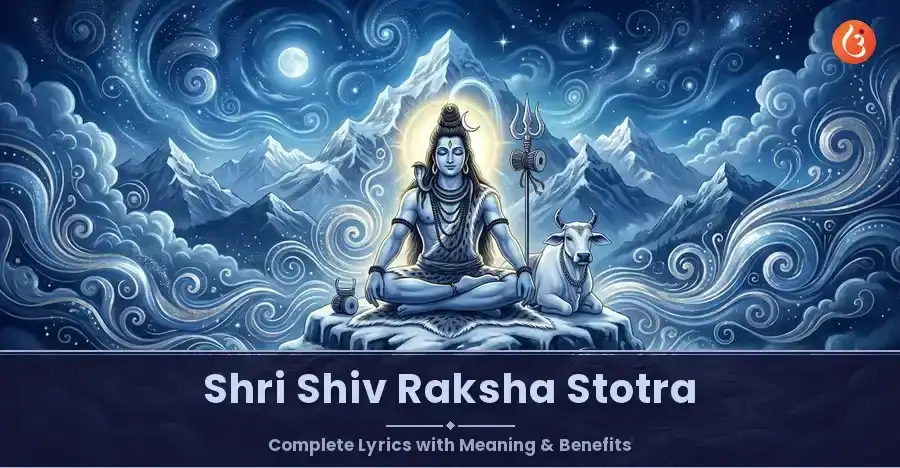
The Shiv Raksha Stotra (शिव रक्षा स्तोत्र) is a powerful Vedic hymn dedicated to Lord Shiva for divine protection. As revealed to the great sage Rishi Yajnavalkya in a dream, this stotra systematically invokes Shiva's various forms to shield every part of the devotee's body and mind from harm. It's not just a prayer; it's a divine armor.
Quick Answer: What You Need to Know
- What: A powerful hymn to Lord Shiva that acts as a spiritual shield (Raksha) against all dangers.
- Who Composed It: Revealed by Lord Shiva directly to Rishi Yajnavalkya, as mentioned in the stotra's own Phala Shruti (verses on benefits).
- Why Chant It: For protection from physical dangers, illnesses, negative energies, and fear, while also seeking spiritual liberation.
- How to Participate: You can deepen your connection by participating in foundational Shiva pujas like the Masik Shivratri Vishesh Puja through Utsav.
Table of Contents
- Who Composed the Shiv Raksha Stotra?
- Complete Shiv Raksha Stotra Lyrics
- Verse-by-Verse Meaning of Shiv Raksha Stotra
- Why Should You Chant This Stotra? (Top Benefits)
- How to Recite Shiv Raksha Stotra: The Complete Vidhi
- Best Days to Chant in 2026
- Participate in Powerful Shiva Pujas on Utsav
- Sources & References
Who Composed the Shiv Raksha Stotra?
The origin of this stotra is incredibly special. According to the stotra's concluding verses (the Phala Shruti), it wasn't composed by a mortal in the ordinary sense. Instead, it was revealed directly by Lord Shiva himself to the great Vedic sage Rishi Yajnavalkya in a dream. This makes it a siddha mantra—a perfected hymn received through divine transmission. Yajnavalkya is one of the most revered sages of the Upanishadic period, a master of Brahmavidya (knowledge of the Absolute), so a hymn revealed to such a realized soul carries immense spiritual potency.
Some sources mistakenly attribute it to Rishi Budha Kaushika, but that's incorrect; he is associated with the Rama Raksha Stotra. The internal evidence of the Shiv Raksha Stotra itself confirms Yajnavalkya as the seer who brought this divine knowledge to the world. It’s a direct gift from Mahadev.
Complete Shiv Raksha Stotra Lyrics
Here is the full, uninterrupted text for recitation.
Asya Sri Shiva Raksha Stotra Mantrasya
Yajnavalkya Rishihi, Sri Sadasivo Devata,
Anushtup Chandaha, Sri Sadasiva Preetyarthe
Shiva Raksha Stotra Jape Viniyogaha
Dhyanam (Opening Meditation)
Charitam deva-devasya, maha-devasya paavanam,
Apaaram paramo daaram, chatur-vargasya saadhanam. || 1 ||Gauri-vinaayako-petam, pancha-vaktram tri-netrakam,
Shivam dhyaatvaa dasa-bhujam, shiva-rakshaam pathen-narah. || 2 ||
Stotra (Main Verses)
Ganga-dharah shirah paatu, phaalam ardhendu-shekharah,
Nayane madana-dhvamsee, karnau sarpa-vibhushanah. || 3 ||Ghraanam paatu puraa-raatih, mukham paatu jagat-patih,
Jihvaam vaageeshvarah paatu, kandharaam shiti-kandharah. || 4 ||Shree-kanthah paatu me kantham, skandhau vishva-dhurandharah,
Bhujau bhu-bhaara-samhartaa, karau paatu pinaaka-dhruk. || 5 ||Hridayam shambu-rah paatu, nabhim paatu dhur-jatih,
Katim vyaaghraajinaam-baarah, sarvam paatu maheshvarah. || 6 ||Paadau paatu prithvee-dhartaa, paada-prishtham prahu-priyah,
Paada-antahsthitam paatu, paarsvau paatu dayaa-mayah. || 7 ||Sarvaan-gaan-me sadaa paatu, aakaasha-vapusah shivah,
Eka-lingah prabhu-rah paatu, dvau maam paatu shivaa-karah. || 8 ||Trini maam paatu vighneshah, chatvaari jagad-ishvarah,
Pancha maam paatu vishveshah, shan-maam paatu vrisha-dhvajah. || 9 ||Sapta maam paatu sarva-jnah, ashtau maam parameshvarah,
Nava maam paatu nagendrah, dasha maam deena-bandhavah. || 10 ||Ekaadasha maam eeshanah, dvaadasha-kam vrishabheshvarah,
Trayodasha-kam tryambakah, chaturdasha-kam chaturmukhah. || 11 ||Panchadasha-kam pancha-vaktrah, shodasha-kam shoolapaanih,
Saptadasha-kam chandramoulih, ashtaadasha-kam ambikaa-patih. || 12 ||Sarva-kaalam sadaa paatu, trishoolam paatu me sadaa,
Khadgam paatu mahaa-rudrah, paatu pinakam paarmeshtikah. || 13 ||
Phala Shruti (Verses on Benefits)
Evam shiva-balopetam, rakshaam yah sukritee pathet,
Sa bhukhtvaa sakalaan kaamaan, shiva-saayujyam-aapnuyaat. || 14 ||Graha-bhoota-pishaachaas-cha, trailokye vicharanti ye,
Doorat-aashu palaayante, shivasya-ananya-keertanaat. || 15 ||Yah svapne gaa-charma-raashau, shivam pashyati yo narah,
Tasya-ayuh saphalam jneeyaat, sarva-siddhis-cha jaayate. || 16 ||Yajnavalkya-kritam punyam, svapne proktam shivena yat,
Pratah-kaale pathed-yas-tu, sa gachchhet-paramam padam. || 17 ||
Verse-by-Verse Meaning of Shiv Raksha Stotra
Understanding the meaning transforms recitation into a profound experience. Here’s what you are invoking.
Verses 1-2: Invocation
You begin by meditating on the pure and glorious deeds of Lord Shiva, the granter of the four pillars of life (Dharma, Artha, Kama, Moksha). You visualize Him with five faces, three eyes, and ten arms, accompanied by Gauri and Vinayaka. This sets the stage for receiving His protection.
Verse 3: Head and Senses
- May Ganga-dhara (bearer of Ganga) protect my head.
- May Ardhendu-shekhara (one with the crescent moon on his forehead) protect my forehead.
- May Madana-dhvamsee (destroyer of Kama, the god of desire) protect my eyes.
- May Sarpa-vibhushanah (one adorned with snakes) protect my ears.
Verse 4-5: Face and Upper Body
- May Pura-raatih (enemy of the Tripurasuras) protect my nose.
- May Jagat-patih (lord of the universe) protect my face.
- May Vaageeshvarah (lord of speech) protect my tongue.
- May Shiti-kandharah (the one with a blue throat, Neelkanth) protect my neck.
- May Shree-kanthah (he of the beautiful throat) protect my throat.
- May Vishva-dhurandharah (bearer of the universe's burden) protect my shoulders.
- May Pinaaka-dhruk (wielder of the Pinaka bow) protect my hands.
Verse 6-7: Torso and Lower Body
- May Shambhu (giver of prosperity) protect my heart.
- May Dhur-jatih (one with matted locks) protect my navel.
- May Vyaaghraajinaam-baarah (one who wears a tiger skin) protect my waist.
- May Maheshvarah (the Great Lord) protect everything.
- May Prithvee-dhartaa (supporter of the Earth) protect my feet.
- May Dayamaya (the compassionate one) protect my sides.
Verses 8-13: Overall and Ethereal Protection
These verses invoke Shiva in his various numerical and elemental forms to protect all parts of your being at all times. For example, it calls upon Tryambakah (the three-eyed one) and Pancha-vaktrah (the five-faced one) to guard the devotee, ensuring protection that transcends the physical form. The prayer extends to His divine weapons like the Trishula (trident) and Pinaka bow, creating a 360-degree shield.
Verses 14-17: The Fruits of Recitation (Phala Shruti)
This is the promise. The one who recites this stotra with devotion enjoys all worldly desires and ultimately attains union with Shiva (Moksha). Negative entities like ghosts and spirits flee from the mere mention of Shiva's name. The final verse confirms that Rishi Yajnavalkya received this from Shiva in a dream, and chanting it in the morning leads to the supreme destination.
Why Should You Chant This Stotra? (Top Benefits)
Reciting the Shiv Raksha Stotra is more than a ritual; it's a life-altering practice. According to the text itself and countless devotee experiences, the benefits are immense.
Spiritual & Karmic Protection
- Divine Armor: The stotra's primary function is creating a kavach or spiritual shield around you. It protects against accidents, illnesses, and unforeseen dangers.
- Dispels Negative Energies: The Phala Shruti explicitly states that ghosts, evil spirits, and other negative entities cannot harm a devotee who chants this stotra. They simply flee.
- Reduces Fear and Anxiety: By invoking the all-powerful Mahadev to protect every part of your being, you cultivate a deep sense of fearlessness and mental peace. It’s a powerful antidote to anxiety.
Practical & Worldly Benefits
- Success and Fulfillment: Verse 14 promises that the devotee will enjoy all worldly desires (sakalaan kaamaan) before ultimately achieving liberation. It helps clear obstacles on your path to success.
- Improved Health: The stotra invokes divine energy to protect every organ and limb, which many devotees find promotes physical well-being and aids in recovery.
- Auspicious Dreams: The stotra mentions that seeing Shiva in a dream signifies a long, successful life where all goals will be achieved. Regular chanting can make one's consciousness more receptive to such divine visions.
How to Recite Shiv Raksha Stotra: The Complete Vidhi
To receive the full benefits, it's best to follow the traditional method (vidhi). It’s simple and can be done at home.
- Preparation: Begin with a bath and wear clean, fresh clothes. Create a sacred space by cleaning the area where you'll sit.
- Setup: Place an image or idol of Lord Shiva before you. Light a lamp (diya) with ghee or sesame oil and an incense stick. You may also make a small offering of bilva leaves, white flowers, or a glass of water.
- Sankalp (Intention): Close your eyes, take a moment to clear your mind, and state your intention for chanting—be it for protection, health, or spiritual growth.
- Recitation: Chant the stotra with clear pronunciation and devotion. Focus on the meaning and visualize Lord Shiva's energy forming a protective shield around you. You don't have to rush; feel the power of each word.
- Closing: After completing the recitation, offer your heartfelt prayers to Lord Shiva. You can conclude by chanting "Om Namah Shivaya" 11 or 108 times.
Best Days to Chant in 2026
While you can chant this stotra daily, certain days are especially powerful for connecting with Lord Shiva's energy.
- Daily: The best time is during Brahma Muhurta (about 90 minutes before sunrise). The stotra itself recommends chanting it in the morning.
- Mondays: As the day of the week dedicated to Lord Shiva, chanting on any Monday magnifies the benefits.
- Pradosh Vrat: This fast, observed on the 13th lunar day (Trayodashi) of each fortnight, is highly auspicious. Chanting during the twilight hour on Pradosh days in 2026 is very effective.
- Masik Shivratri: The monthly Shivratri, falling on the 14th day of the dark fortnight, is another powerful window. Check the Utsav Panchang for the specific dates in 2026.
- Maha Shivratri: The Great Night of Shiva is the most potent time of the year for any Shiva-related sadhana.
Participate in Powerful Shiva Pujas on Utsav
Chanting the Shiv Raksha Stotra is a personal practice. You can complement it by participating in pujas performed by verified pandits at sacred temples, amplifying the protective blessings in your life.
Recommended Pujas on Utsav:
- Masik Shivratri Vishesh Rakt Abhishek: Participate in this powerful monthly ritual to align with Shiva's energy cycles. Dakshina starts from ₹501.
- Jyotirlinga Pujas: Connect with the immense power of the twelve self-manifested lingams of Shiva across India. Explore pujas like the Bhadra Shivratri Special Tri Jyotirlinga Puja.
When you participate through Utsav, you fill a Sankalp Form with your name and gotra, and the pandit performs the puja on your behalf. You receive a video of the puja and blessed prasad delivered to your home.
Sources & References
Scriptural Authority:
- Shiv Raksha Stotra, Phala Shruti (Verses 14-17): The text itself confirms its origin, stating it was transmitted by Lord Shiva to Rishi Yajnavalkya in a dream. This is the primary source.
- Vedic Tradition: Rishi Yajnavalkya is a revered sage in Hinduism, known for authoring the Shatapatha Brahmana and the Brihadaranyaka Upanishad.
Temple & Ritual Tradition:
- The recitation vidhi and auspicious timings are based on practices followed in major Shiva temples and as prescribed in the Dharma Shastras.
Related Pujas on Utsav:
- Masik Shivratri Puja
- Jyotirlinga Pujas