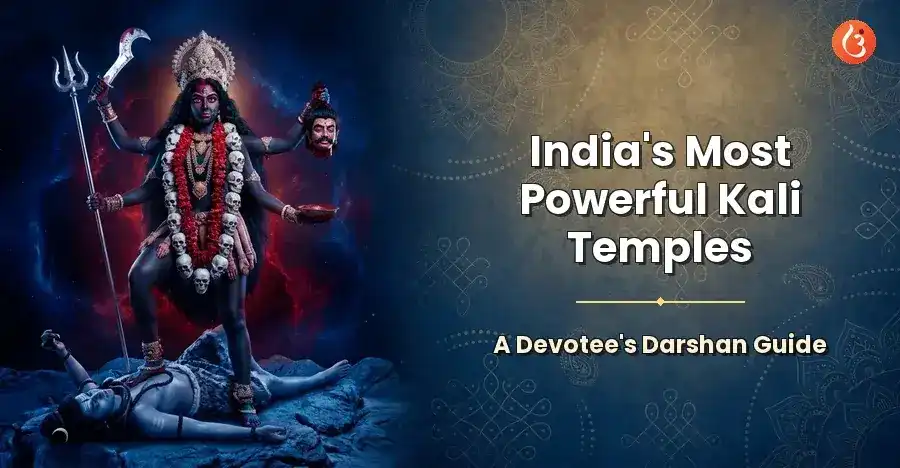
10 Essential Kali Temples: A Devotee's Darshan Guide
By Pandit Anand S., Vedic Scholar with 15+ years in Shakti traditions & temple worship | Reviewed by Utsav editorial team
Maa Kali's most famous temples are powerful hubs of Shakti, primarily located where parts of Goddess Sati's body fell, forming the Shakti Peeths. According to the Devi Bhagavata Purana, these sites, like Kalighat and Kamakhya, are not just temples but living centers of divine energy. They represent the fierce, protective, and transformative power of the Divine Mother.
Quick Answer: Top Kali Temples
- What: The most sacred temples dedicated to Maa Kali (महाकाली), the goddess of time and transformation.
- Why Visit: These sites, many of which are Shakti Peeths, are considered epicenters of spiritual energy for protection, liberation (moksha), and overcoming life's obstacles.
- Key Locations: Kolkata (West Bengal), Guwahati (Assam), and Ujjain (Madhya Pradesh) are major hubs for Kali worship.
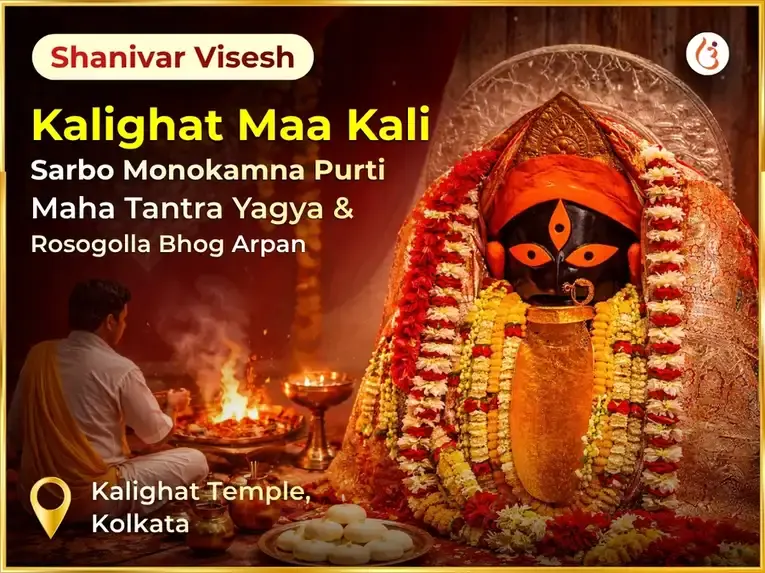
- How to Participate: If you can't travel, you can Participate in Kali Pujas at these temples through Utsav, with Dakshina starting from ₹501.
Table of Contents
- Kalighat Kali Temple, Kolkata
- Dakshineswar Kali Temple, Kolkata
- Kamakhya Temple, Guwahati
- Tarapith Temple, West Bengal
- Mahakali Temple, Ujjain
- Gadkalika Temple, Ujjain
- Bhadrakali Temple, Warangal
- Kripamayee Kali Temple, Baranagar
- Mundeshwari Devi Temple, Bihar
- Chamunda Devi Temple, Kangra
- Can't Visit? Participate in Kali Puja From Home
- Sources & References
1. Kalighat Kali Temple, Kolkata
As one of the most revered of the 51 Shakti Peeths, the Kalika Purana states that Kalighat is where the toes of Sati's right foot fell. This makes it an incredibly potent site for devotees. You aren't just visiting a temple; you're connecting with the direct essence of Shakti.
The temple's unique idol, with three large eyes and a golden tongue, is an unforgettable sight. It's a raw, powerful energy that you feel instantly. The current structure, standing for about 200 years, is always bustling, especially during major festivals. It’s the spiritual heart of Kolkata.
- Location: Kalighat, Kolkata, West Bengal
- Significance: A primary Shakti Peeth, embodying immense divine power.
- Key Festival: Kali Puja (Diwali) is celebrated with unparalleled fervor.
- Gyan Link: Read the detailed story of Kalighat Kali Temple.
2. Dakshineswar Kali Temple, Kolkata
Built in 1855 by the visionary Rani Rashmoni, Dakshineswar is inseparable from the legacy of Sri Ramakrishna Paramahamsa. According to temple records, it was here that Ramakrishna had his profound visions of the Divine Mother. This isn't just a place of worship; it's a place of enlightenment.
The temple, built in the traditional 'Navaratna' (nine spires) style, sits beautifully on the banks of the Hooghly. The main deity, Bhavatarini, an aspect of Kali, is believed to be the saviouress of the universe. The entire complex, including the twelve Shiva temples, radiates a deep sense of peace.
- Location: Dakshineswar, Kolkata, West Bengal
- Significance: The place of sadhana for Sri Ramakrishna Paramahamsa.
- Key Festival: Kali Puja and the birth anniversaries of Sri Ramakrishna and Sarada Devi.
3. Kamakhya Temple, Guwahati
While the entire Kamakhya complex is a major pilgrimage site, its connection to Kali is profound through the Mahavidyas. According to Tantric texts like the Yogini Tantra, the temples for Matangi and Kamala (forms of Kali) within the complex are essential for Mahavidya sadhana.
This temple is one of the most important Tantric centers in the world. The worship here is unique as it focuses on the yoni (vulva) of the Goddess, representing creation and life itself. It’s a powerful place that challenges and transforms your understanding of divinity.
- Location: Nilachal Hills, Guwahati, Assam
- Significance: A primary Shakti Peeth (where Sati's yoni fell) and a major center for Tantra and Mahavidya worship.
- Key Festival: The Ambubachi Mela (June 2026) is a massive annual festival celebrating the Goddess's menstruation.
4. Tarapith Temple, West Bengal
Another major Shakti Peeth, Tarapith is where Sati's third eye is believed to have fallen, as described in local Tantric traditions. This makes it a site of immense spiritual vision and power. The presiding deity, Maa Tara, is a fierce form of Kali, often depicted with a blood-red tongue.
The temple is famous for its association with the 19th-century saint Bamakhepa, who performed intense sadhana here. The nearby cremation ground is considered a key part of the worship, symbolizing the cycle of life and death that Kali governs. It's an intense but deeply transformative place.
- Location: Birbhum, West Bengal
- Significance: Shakti Peeth of the third eye and a major center for Tantric practices.
- Key Festival: Koushiki Amavasya is considered the most auspicious day to worship Maa Tara.
5. Mahakali Temple, Ujjain
Located in the sacred city of Mahakal, Ujjain, this temple is another powerful Shakti Peeth. As per the Shiva Purana, this is the spot where the upper lip of Goddess Sati fell. Its proximity to the Mahakaleshwar Jyotirlinga makes it a doubly potent site for pilgrims.
The temple is also known as Harsiddhi Mata. Devotees believe that worshipping here grants the power to overcome enemies and obstacles. The two large lamp pillars, or Deepmalikas, in the temple courtyard are a distinctive feature. During Navratri, they are illuminated with hundreds of diyas, creating a breathtaking spectacle. The energy here is palpable, a fierce, protective presence that you can feel guarding the ancient city.
- Location: Ujjain, Madhya Pradesh
- Significance: A Shakti Peeth where Sati's upper lip fell.
- Key Festival: Navratri is celebrated with great devotion and special rituals.
6. Gadkalika Temple, Ujjain
This ancient temple holds a special place in literary history. Local legends, documented by MP Tourism, state this is where the great poet Kalidasa worshipped Goddess Kali and received the divine inspiration for his timeless works like Shakuntala.
For anyone seeking creative energy, wisdom, or success in education, this temple is a must-visit. It's believed that the Goddess here is a 'Jagrit' (living) deity who blesses her devotees with profound knowledge and artistic skill. It’s a quieter, more focused energy than Mahakali, but just as powerful.
- Location: Ujjain, Madhya Pradesh
- Significance: Believed to be the place of worship for the poet Kalidasa.
- Key Festival: Vasant Panchami, dedicated to knowledge and arts, is a special day here.
7. Bhadrakali Temple, Warangal
According to the temple's historical records, the main deity of Bhadrakali was installed by the Chalukya kings in the 7th century. This makes it one of the oldest Bhadrakali temples in India. The Goddess here is depicted in a serene yet powerful form, holding various weapons.
The temple is beautifully situated on the banks of the Bhadrakali Lake. Later patronized and renovated by the Kakatiya kings, the temple stands as a testament to their deep devotion to Shakti. What’s unique is the stone image of the Goddess, which is almost nine feet tall. Devotees come here to pray for strength, courage, and the fulfillment of their wishes.
- Location: Warangal, Telangana
- Significance: One of the oldest temples dedicated to the Bhadrakali form of the Goddess.
- Key Festival: Navratri is celebrated for nine days with different alankarams (decorations) for the Goddess.
8. Kripamayee Kali Temple, Baranagar
Founded in 1848 by Jayram Mitra, a devotee of Kali, this temple complex in Baranagar is a hidden gem. The main temple houses the idol of Kripamayee (the merciful one), and as per temple tradition, it is considered the "second Dakshineswar." The temple was built after Jayram Mitra had a divine vision of the Goddess, who instructed him to create a place for her worship.
The complex also contains twelve Shiva temples, mirroring the structure of Dakshineswar. It’s a place of deep peace and devotion, away from the massive crowds of the more famous Kolkata temples. It’s a perfect spot for quiet reflection and prayer.
- Location: Baranagar, West Bengal
- Significance: A serene temple complex often called the "second Dakshineswar."
- Key Festival: Kali Puja is the main festival, celebrated with traditional rituals.
9. Mundeshwari Devi Temple, Bihar
Recognized by the Archaeological Survey of India (ASI) as one of the oldest functional temples in the country, Mundeshwari Temple dates back to at least 625 CE. While the main deity is a form of Durga, its Tantric traditions and the practice of animal sacrifice (now symbolic) have strong links to Kali worship.
The octagonal structure of the temple is rare and architecturally significant. Worshipping here feels like stepping back in time. The deity is believed to be extremely powerful, granting wishes to those who pray with a pure heart.
- Location: Kaimur district, Bihar
- Significance: One of India's oldest functional Hindu temples with strong Shakti traditions.
- Key Festival: Ram Navami and Navratri see a large gathering of devotees.
10. Chamunda Devi Temple, Kangra
This temple is dedicated to Chamunda, a fierce form of Devi who, according to the Devi Mahatmya, emerged from the eyebrow of Goddess Durga to slay the demons Chanda and Munda. This form is often identified with Kali.
The temple is located on the banks of the Baner River and is believed to be a place where one can attain spiritual liberation. Adjacent to the main shrine is a small cave containing a stone lingam representing Shiva, symbolizing the inseparable union of Shiva and Shakti. The main idol is kept covered, and the sanctum is a cave-like structure, adding to the temple's mysterious and powerful aura.
- Location: Kangra, Himachal Pradesh
- Significance: A sacred site dedicated to the demon-slaying form of Chamunda.
- Key Festival: Navratri is the most important festival, attracting pilgrims from all over North India.
Can't Visit? Participate in Kali Puja From Home
For devotees who can't travel, you can still connect with the divine energy of Maa Kali. Verified pandits perform these pujas on your behalf, ensuring your prayers reach the Goddess. When you participate, you fill out a Sankalp Form with your name and gotra, making the offering personal.
Utsav offers several powerful Kali pujas performed at these sacred sites. It's a beautiful way to maintain your spiritual practice from anywhere in the world.
- Amavasya Vishesh Kali Sarbo Monokamna Purti Maha Tantra Yagya: A powerful tantric ritual performed at Kalighat to fulfill all desires.
- Koushiki Amavasya Vishesh Tara Vajra Kavach Mahapuja: A special Mahapuja at Tarapith for protection and spiritual strength.
- Maa Bhadrakali 108 Munda Mala Seva: A unique seva for victory and prosperity, dedicated to Bhadrakali.
More Temples
Temple Name | Location | Significance |
|---|---|---|
Mahakali Mandir, Pavagadh | Pavagadh, Gujarat | A major Shakti Peeth where Sati's right toe fell; part of a UNESCO World Heritage site. |
Gadkalika Temple | Ujjain, Madhya Pradesh | The deity is believed to have blessed the great poet Kalidasa with his literary genius. |
Bhadrakali Temple | Warangal, Telangana | One of the oldest Bhadrakali temples, known for its unique 9-foot-tall stone image of the Goddess. |
Kripamayee Kali Temple | Baranagar, West Bengal | An important historical temple that predates Dakshineswar, also known as Joy Mitra Kalibari. |
Mundeshwari Devi Temple | Kaimur, Bihar | One of the oldest functional Hindu temples in the world, dating back to at least 108 AD. |
Chamunda Devi Temple | Kangra, Himachal Pradesh | A revered Shakti Peeth where the Goddess is worshipped as a fierce form of Durga/Kali. |
Kalikambal Temple | Chennai, Tamil Nadu | A prominent Kali temple in South India, famously visited by Chhatrapati Shivaji Maharaj in 1677. |
Sources & References
Scriptural Authority:
- Devi Bhagavata Purana: Describes the origin of the Shakti Peeths.
- Kalika Purana & Yogini Tantra: Key texts for Kali and Kamakhya worship.
- Devi Mahatmya: Details the emergence of Kali and Chamunda.
Temple Information (Verified):
- Dakshineswar Kali Temple:
- Official Website: dakshineswarkalitemple.org
- Trust/Management: Dakshineswar Kali Temple and Debottar Estate
- Last verified: July 2026
- Kalighat Temple:
- Management: Kalighat Temple Committee
- Source: West Bengal Tourism Department
- Last verified: July 2026
Historical/Architectural:
- Archaeological Survey of India (ASI) records for Mundeshwari Devi Temple.
- Madhya Pradesh Tourism for information on Gadkalika Temple.