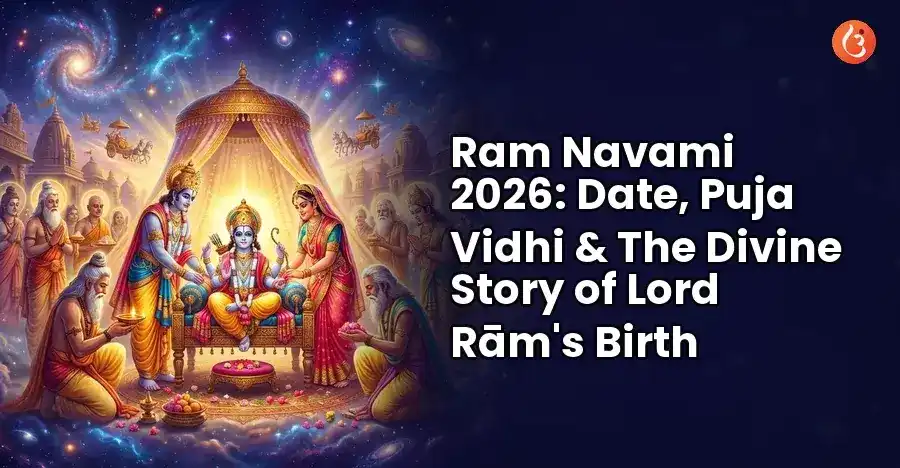
Ram Navami 2026: Date, Puja Vidhi & The Divine Story of Lord Rām's Birth
Ram Navami will be celebrated on Friday, March 27, 2026, marking the birth of Lord Rām, the seventh avatar of Lord Viṣṇu. The Valmiki Ramayana (Bala Kanda, Sarga 18) describes this as the sacred day dharma was born in human form to restore cosmic balance. It isn't just a festival; it's a powerful, deeply meaningful reminder of righteousness.
Quick Answer
- What: Ram Navami (राम नवमी) celebrates the divine birth of Lord Rām in Ayodhya.
- When: Friday, March 27, 2026. The most auspicious puja time is during the Madhyahna (midday) period.
- Why: To honor Viṣṇu's descent as Rām, who came to vanquish evil and establish a path of righteousness.
- How to Participate: Participate in special pujas at Kale Ram Mandir, Ayodhya — Dakshina from ₹501.
Table of Contents
- What Is Ram Navami & Why Is It So Important?
- When Is Ram Navami in 2026? Key Dates & Timings
- The Divine Story of Lord Rām's Birth: What Do Scriptures Say?
- How Should You Observe Ram Navami at Home? A Simple Puja Vidhi
- The Power of Chanting: Key Mantras for Ram Navami
- How to Participate in Ram Navami Pujas on Utsav
- Sources & References
What Is Ram Navami & Why Is It So Important?
Ram Navami isn't just another festival on the Hindu calendar. It's the celebration of Maryada Purushottam—the perfect man, the ideal king, the embodiment of dharma itself. Lord Rām’s life story, the Ramayana, provides a timeless guide to righteous living. So, observing this day isn't only about celebration; it's about realigning your own life with the principles of truth, duty, and compassion. You don't have to be a king to walk his path.
This day also marks the culmination of the nine-day Chaitra Navratri festival, a period of intense spiritual practice. For devotees, Ram Navami is the beautiful peak of that devotion. It’s a moment to reflect on Rām's victory over the demon king Ravana, which symbolizes the ultimate triumph of good over evil. And that's a lesson we can all use.
When Is Ram Navami in 2026? Key Dates & Timings
Mark your calendar. Ram Navami falls on Friday, March 27, 2026. But timing is everything. The Navami Tithi (ninth lunar day) begins at 01:33 PM on March 26 and concludes at 02:07 PM on March 27. The most powerful time for puja is the Madhyahna Muhurat, which is from 11:18 AM to 01:41 PM on March 27.
Why does this specific window matter so much? It's believed that Lord Viṣṇu took birth as Rām during this midday period. Performing your prayers and rituals during this time aligns your devotion with the cosmic energy of the original event. It’s the most potent time for your prayers to be heard. You can check the precise timings for your location on the Utsav Panchang for March 27, 2026.
The Divine Story of Lord Rām's Birth: What Do Scriptures Say?
The story of Rām's birth isn't just a tale; it's a divine intervention documented in the Ramayana. King Dasharatha of Ayodhya was without an heir, a deep sorrow for a righteous king. On the advice of Sage Vashistha, he performed the Putrakameshti Yajna, a sacred fire ritual to beget progeny. It was a massive undertaking.
From the sacrificial fire, a divine being emerged, carrying a pot of payasam (sweet pudding). The sage instructed the king to distribute it among his three queens: Kausalya, Kaikeyi, and Sumitra. In due time, Kausalya gave birth to Rām, Kaikeyi to Bharata, and Sumitra to the twins Lakshmana and Shatrughna. It wasn't just a royal birth; it was a cosmic answer to the prayers of gods and mortals to end the tyranny of Ravana. You can explore more about Rām's life in our guide to the marriage of Sita and Rama.
How Should You Observe Ram Navami at Home? A Simple Puja Vidhi
You don't need a grand temple setup to connect with Lord Rām's energy. A simple, heartfelt puja at home is incredibly powerful. Here’s a straightforward vidhi you can follow.
First, wake up early, bathe, and clean your home temple. Place an idol or picture of Lord Rām, Sita, Lakshmana, and Hanuman. The puja begins with lighting a ghee lamp and incense. Offer fresh flowers, fruits (especially bananas), and tulsi leaves. You can prepare a simple prasad like panjiri or kheer. The core of the puja is chanting mantras and reading or listening to chapters from the Ramayana, especially the Bala Kanda. Many devotees also observe a fast from sunrise until the next morning. It's that simple.
The Power of Chanting: Key Mantras for Ram Navami
Mantras are more than just words; they are sonic formulas that focus the mind and invoke divine presence. On Ram Navami, chanting specific mantras amplifies your devotion. This isn't just recitation; it's vibration.
Rām Tarak Mantra
- Sanskrit (IAST): Śrī Rām, Jaya Rām, Jaya Jaya Rām
- Devanagari: श्री राम, जय राम, जय जय राम
- Translation: Victory to Lord Rām, Victory, Victory to Lord Rām.
- Why it's powerful: This is one of the simplest yet most effective mantras. It’s believed that chanting it with devotion can relieve one from worldly troubles and lead to moksha (liberation). It's perfect for continuous chanting throughout the day.
How to Participate in Ram Navami Pujas on Utsav
What if you can't perform an elaborate puja at home? Don't worry. Utsav connects you directly with verified pandits at sacred temples to perform pujas on your behalf. It’s a deeply meaningful way to participate.
Here’s how simple we've made it for over 5 Lakh+ devotees:
1. You select a puja from our list.
2. You complete the Sankalp form with your name and gotra.
3. A verified Pandit performs the puja, chanting your details.
4. You receive a video of the puja and authentic temple prasad is shipped to your home.
Explore Ram Navami Pujas:
* Participate in Kale Ram Mandir Ayodhya Puja for Desire Fulfillment — Dakshina from ₹501
* Participate in Sri Ram Hanuman Puja in Ayodhya — Dakshina from ₹1100
Sources & References
Scriptural Authority:
* Valmiki Ramayana, Bala Kanda (Book 1)
* Tulsidas's Ramcharitmanas
Temple Research:
* Ritual practices from Ram Janmabhoomi Temple, Ayodhya
* Kale Ram Mandir, Ayodhya
Related Pujas on Utsav:
* Kale Ram Mandir Ayodhya Puja
* Dusshera Special Sri Ram Hanuman Puja Ayodhya