Sharad Navratri 2026: Complete Guide to Dates, Muhurat, & Puja Vidhi
Sharad Navratri 2026 begins on Sunday, October 11, 2026, and concludes with Vijayadashami (Dussehra) on Tuesday, October 20, 2026. This nine-night festival is a powerful period dedicated to worshipping the nine forms of Goddess Durga. According to the Markandeya Purana, these rituals celebrate the victory of dharma over adharma, invoking divine protection and spiritual renewal.
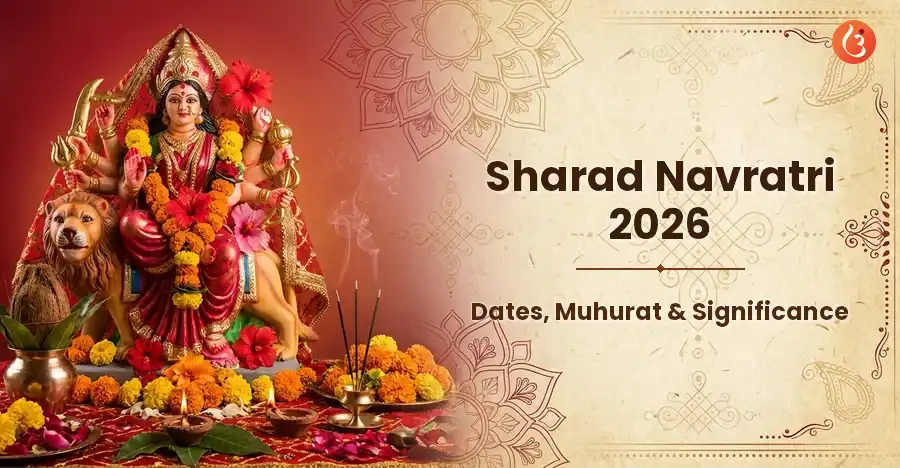
Quick Answer: Sharad Navratri 2026
- What: A nine-night festival honoring the nine divine forms of Goddess Durga (Navadurga).
- When: October 11, 2026 to October 20, 2026.
- Why: To celebrate the victory of good over evil, seek blessings for protection and prosperity, and engage in deep spiritual practice.
- How to Participate: Perform daily pujas at home or Participate in a Durga Chalisa Path at a verified temple through Utsav.
Table of Contents
- Sharad Navratri 2026: Key Dates & Timings
- The Unwavering Significance of Navratri
- The Nine Nights: Worshipping Navadurga
- Navratri Puja Vidhi: A Step-by-Step Guide
- Essential Puja Samagri Checklist
- The Core Mantra for Navratri Sadhana
- Navratri Fasting (Vrat) Rules
- Do's and Don'ts During Sharad Navratri
- Participate in Navratri Pujas with Utsav
- Sources & References
Sharad Navratri 2026: Key Dates & Timings
The timing of these nine nights is everything. The Pratipada Tithi marks the beginning, with the Ghatasthapana muhurat being the most crucial window for invoking the Goddess. All dates are based on the Hindu lunar calendar, which you can track on the Utsav Panchang.
Date | Day | Tithi | Form of Durga |
|---|---|---|---|
Sunday | Pratipada | Shailaputri (Ghatasthapana) | |
Monday | Dwitiya | Brahmacharini | |
Tuesday | Tritiya | Chandraghanta | |
Wednesday | Chaturthi | Kushmanda | |
Thursday | Panchami | Skandamata | |
Friday | Shashthi | Katyayani | |
Saturday | Saptami | Kalaratri | |
Sunday | Ashtami | Mahagauri (Kanya Pujan) | |
Monday | Navami | Siddhidatri (Maha Navami) | |
Tuesday | Dashami | Vijayadashami (Dussehra) |
Ghatasthapana Muhurat 2026 (New Delhi): To be updated closer to the date. Please refer to the Utsav Panchang for the precise, location-based auspicious time.
The Unwavering Significance of Navratri
This isn't just another festival. The spiritual significance of Sharad Navratri is deeply rooted in scripture, most notably the Devi Mahatmya (देवी माहात्म्यम्) from the Markandeya Purana. It recounts Goddess Durga's epic battle and victory over the buffalo demon Mahishasura. So, what does this ancient story mean for you?
These nine nights represent a powerful opportunity for inner transformation. It's a time to conquer your own "inner demons"—negativity, ego, and ignorance. By fasting, chanting, and performing puja, you align yourself with the divine feminine energy, seeking protection, prosperity, and the strength to overcome life's obstacles.
The Nine Nights: Worshipping Navadurga
Each day of Navratri is dedicated to one of the nine distinct forms of the Goddess. Honoring each form with its specific mantra and color is a core part of the sadhana. It's a beautiful progression of spiritual energy. You can learn more about the specific foods to offer Maa Durga each day to deepen your practice.
Day | Goddess | Color | Significance |
|---|---|---|---|
1 | Shailaputri | Royal Blue | Daughter of the Himalayas, embodiment of purity. |
2 | Brahmacharini | Yellow | Represents penance, knowledge, and spiritual discipline. |
3 | Chandraghanta | Green | Destroyer of evil, brings peace and courage. |
4 | Kushmanda | Grey | The cosmic egg, creator of the universe. |
5 | Skandamata | Orange | Mother of Kartikeya, represents motherly love. |
6 | Katyayani | White | Fierce warrior, born from the gods' collective anger. |
7 | Kalaratri | Red | The most ferocious form, destroyer of darkness. |
8 | Mahagauri | Sky Blue | Represents ultimate purity and serenity. |
9 | Siddhidatri | Pink | Giver of all boons and supernatural powers (siddhis). |
Navratri Puja Vidhi: A Step-by-Step Guide
Performing the puja correctly is essential. As detailed in various Dharma Shastras, the vidhi channels the divine energy into your home. Don't feel intimidated; the most important ingredient is your devotion.
- Ghatasthapana (Day 1): This is the most critical step. In the auspicious muhurat, place a Kalash (pot) filled with holy water on a bed of soil mixed with barley seeds. Place a coconut wrapped in a red cloth on top of mango leaves over the Kalash. This symbolizes the presence of the Goddess.
- Sankalp: Take a vow to observe the Navratri rituals with devotion for all nine days. Mention your name, gotra, and your prayer to the Goddess.
- Daily Puja: Every morning and evening, light a ghee lamp and incense. Offer fresh flowers, fruits, and sweets (naivedya) to the deity.
- Patha (Recitation): Chant the Durga Saptashati or Devi Mahatmya daily. If you're short on time, reciting the Siddha Kunjika Stotram is also considered highly effective.
- Aarti: Conclude the daily puja by singing the Aarti of the Goddess, "Om Jai Ambe Gauri."
- Kanya Pujan (Ashtami/Navami): Worship nine young girls, seeing them as manifestations of the nine forms of Durga. Offer them food, clothes, and dakshina.
- Visarjan (Day 10): On Vijayadashami, perform a final puja. Sprinkle the holy water from the Kalash throughout your house and immerse the barley shoots in a clean body of water.
Essential Puja Samagri Checklist
Having all the materials ready makes the puja process smooth and focused. This checklist, based on traditional puja requirements, covers all you'll need.
Category | Item | Purpose |
|---|---|---|
Idols & Images | Idol or picture of Goddess Durga | The focus of worship |
Puja Items | Earthen pot (Kalash), soil, barley seeds | For Ghatasthapana |
Coconut, red cloth, mango leaves | To place on the Kalash | |
Kumkum, haldi, chandan, akshat | For tilak and offerings | |
Lamps & Incense | Ghee diya, camphor (kapur), agarbatti | To create a sacred atmosphere |
Offerings | Fruits, sweets (mithai), betel leaves/nuts | Naivedya for the Goddess |
Sacred Texts | Durga Saptashati book | For daily recitation |
The Core Mantra for Navratri Sadhana
While there are many mantras, the Navarna Mantra is considered the seed mantra for Goddess Durga. As prescribed by Vedic pandits, chanting this mantra aligns your consciousness with the Goddess's protective and creative energies. It's incredibly powerful.
Navarna Mantra (नवार्ण मंत्र):
ॐ ऐं ह्रीं क्लीं चामुण्डायै विच्चे
Om Aim Hreem Kleem Chamundaye Viche
Meaning: This mantra invokes the three primary forms of the Goddess: Mahasaraswati (Aim), Mahalakshmi (Hreem), and Mahakali (Kleem), to vanquish evil and grant boons.
Recitation: Chant one mala (108 times) daily, especially during the sandhi kaal (juncture of day and night).
Navratri Fasting (Vrat) Rules
Fasting during Navratri is a form of tapasya (austerity) that purifies the body and mind. It's not about starving yourself; it's about disciplined eating.
- What to Eat: Kuttu atta (buckwheat flour), singhara atta (water chestnut flour), sabudana (tapioca pearls), fruits, milk, yogurt, and potatoes. Sendha namak (rock salt) is used instead of regular salt.
- What to Avoid: All grains (wheat, rice), lentils, non-vegetarian food, onions, garlic, alcohol, and processed foods.
- Types of Fasts: You can choose your level of observance—from a strict water-only fast to a fruit-and-milk diet, or a one-meal-a-day plan with permitted foods.
- Breaking the Fast (Paran): The fast is traditionally broken after Kanya Pujan on Ashtami or Navami, or on Dashami after the final puja.
Do's and Don'ts During Sharad Navratri
Observing these simple guidelines maintains the sanctity of the festival. Think of it as creating the best possible environment for divine energy.
Do's:
* Maintain cleanliness in your home and puja area.
* Wear clean, simple clothes (preferably red, yellow, or white).
* Maintain a calm and positive mindset.
* Read or listen to the Devi Mahatmya.
* Donate to the needy and practice compassion.
Don'ts:
* Avoid cutting hair or nails during the nine days.
* Refrain from consuming tamasic foods (onion, garlic) and non-vegetarian items.
* Avoid using leather products.
* Do not engage in arguments or use harsh language.
Participate in Navratri Pujas with Utsav
Can't perform the detailed rituals at home? Don't worry. Utsav connects you with verified temples and pandits to ensure your prayers are offered correctly. You can participate in special Navratri rituals from anywhere.
- Mangalvar Visesh Durga Kund Kashi Durga Chalisa Path: Participate in a powerful Durga Chalisa recitation at the sacred Durga Kund in Kashi. Dakshina starts from just ₹251.
- Gupta Navratri Dashami Visesh Sri Matangi Puja: While focused on Gupta Navratri, this puja is a powerful way to honor the Mahavidyas, a fierce form of the Goddess. Explore this unique ritual.
When you participate, pandits will make the offering while chanting your name and gotra. You'll receive a video of the puja and blessed prasad delivered to your home.
Tithi Aarti
जय अम्बे गौरी, मैया जय श्यामा गौरी।
तुमको निशदिन ध्यावत, हरि ब्रह्मा शिवरी॥
मांग सिंदूर विराजत, टीको मृगमद को।
उज्जवल से दोउ नैना, चंद्रवदन नीको॥
Jai Ambe Gauri, Maiya Jai Shyama Gauri.
Tumko nishdin dhyavat, Hari Brahma Shivri.
Maang sindoor virajat, teeko mrigmad ko.
Ujjwal se dou naina, chandravadan neeko.
This timeless hymn, 'Jai Ambe Gauri,' is a devotional prayer dedicated to the universal mother, Goddess Durga. The opening verse offers salutations to her radiant forms, proclaiming that even the divine trinity of Brahma, Vishnu (Hari), and Shiva constantly meditate upon her. It beautifully describes her divine appearance, with auspicious sindoor in her hair parting and a face as luminous as the moon.
When to sing: This aarti is an essential part of the Navratri rituals and is sung to conclude the daily puja, typically in the morning and evening. While singing, devotees offer a lit ghee lamp (diya) to the deity, circling it in a clockwise motion to symbolize the dispelling of darkness and the circulation of divine energy.
Sources & References
- Scriptural Authority: Markandeya Purana (which contains the Devi Mahatmya).
- Ritual Vidhi: Paraskara Grihya Sutra and other Dharma Shastra texts.
- Panchang & Timing: Dates and muhurat timings are verified against Drikpanchang.com and the Utsav Panchang.
- Related Pujas on Utsav: Mangalvar Visesh Durga Kund Kashi Durga Chalisa Path.